Every service.
Documented.
A clean, searchable service history for enthusiast cars, with the actual receipts attached. Upload once, screen every record, share one link with buyers.
Free to archive. $39 once per car when you're ready to share it.
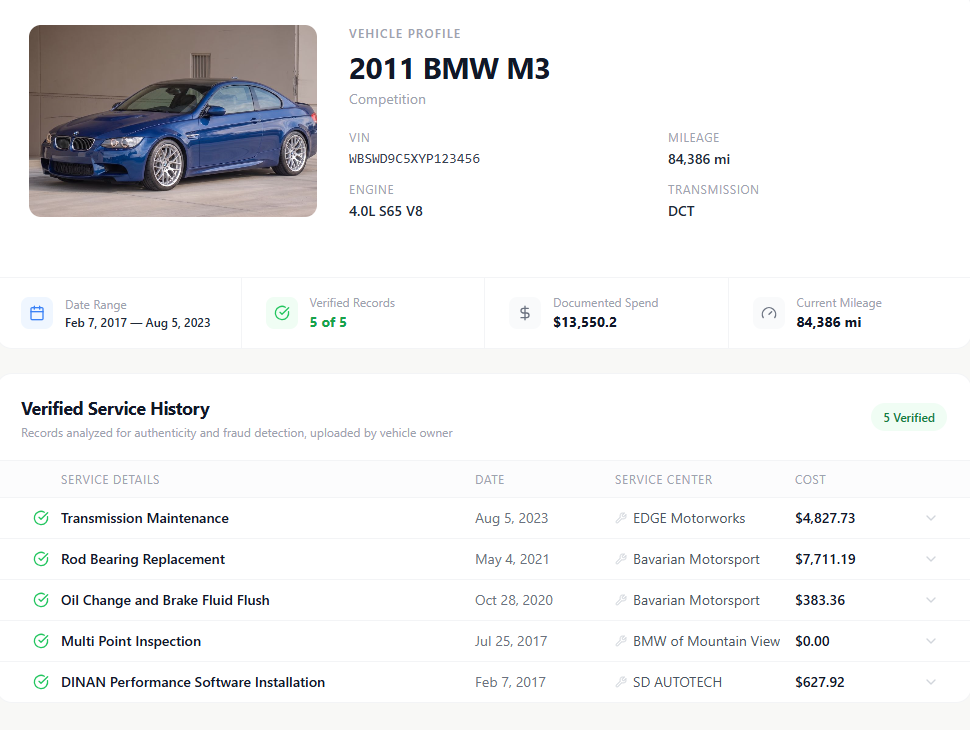
Built once. Shared anywhere you sell.
Your archive lives at a single link. Drop it into an auction listing, send it to a private buyer, or hand it to a dealer. Sell the car and the archive transfers with it, the next owner keeps the history and adds to it.
AutoArchive is an independent service. Listed platforms are examples of where sellers use their reports, not partners or affiliates.
From binder to searchable record in minutes.
Upload
Drop in your invoices, work orders, and inspection reports. PDFs, photos, scans. Whatever's in the folder.
Screen
We read each document into structured data, analyse the original file for signs of after-the-fact editing, and compare the odometer and dates against the rest of the car's history.
Share
One link, with every original document attached. Paste it into a listing or send it straight to a buyer.
CarFax doesn’t know your car’s real story.
CarFax depends on shops that report to its database. Independent specialists, private mechanics, and most enthusiast work are invisible to it. Buyers know this, and they discount accordingly.
What we don’t claim.
Every record carries a badge that says Checked, not “Verified.” That word is deliberate. Automated screening can confirm the absence of the specific problems we look for. It cannot prove a document is genuine, and anyone telling you otherwise is selling you something.
Once a document is printed and re-scanned, the digital trail that reveals editing is gone. What’s left is the odometer timeline, and your own eyes on the original.
VLMs never see the original file, only a downsampled copy. Ask one to spot a font anomaly and it will happily invent one. We don’t ask.
A record is flagged for review, never accused. A tool that cries wolf is worse than no tool, because one false alarm on a receipt you know is real destroys every flag after it.
What we do catch: lazy fakes, odometer rollbacks, and logical impossibilities. Then we put the original document on the page, next to the data, so the buyer decides. The software’s job is to make the receipts legible and surface what it can actually detect. The human stays in control.
Free to archive. Pay when you share.
One price, one time, per car. No subscription, no vehicle limits, nothing recurring.
- Unlimited vehicles
- Unlimited records per vehicle
- Every record screened, paid or not
- Your originals, stored and searchable
- Publish one car’s report to a shareable link
- Stays live forever — no renewal
- Transfers to the buyer with the car
- Pay again only when you archive another car
Paying publishes the link. It doesn’t change what a record says. Screening runs identically whether you ever pay or not, a record flagged Needs review stays flagged on a published report, and there’s no refund for a flag. The badge is worth something to a buyer only if it can’t be bought.
Your car deserves a record.
Archive every service. Keep every receipt. Hand the next owner a history they can read for themselves.
Start your archive